
Who says grilling season ends when the snow falls? One of the best-kept secrets of kamado ownership is that these ceramic cookers perform beautifully in cold weather — even when the thermometer drops below freezing. The thick ceramic insulation that makes kamados so efficient at holding heat also makes them remarkably resistant to cold ambient temperatures.
If you’ve been storing your kamado for the winter, it’s time to roll it back out. Here’s everything you need to know about cold-weather kamado grilling.
Why Kamados Excel in Winter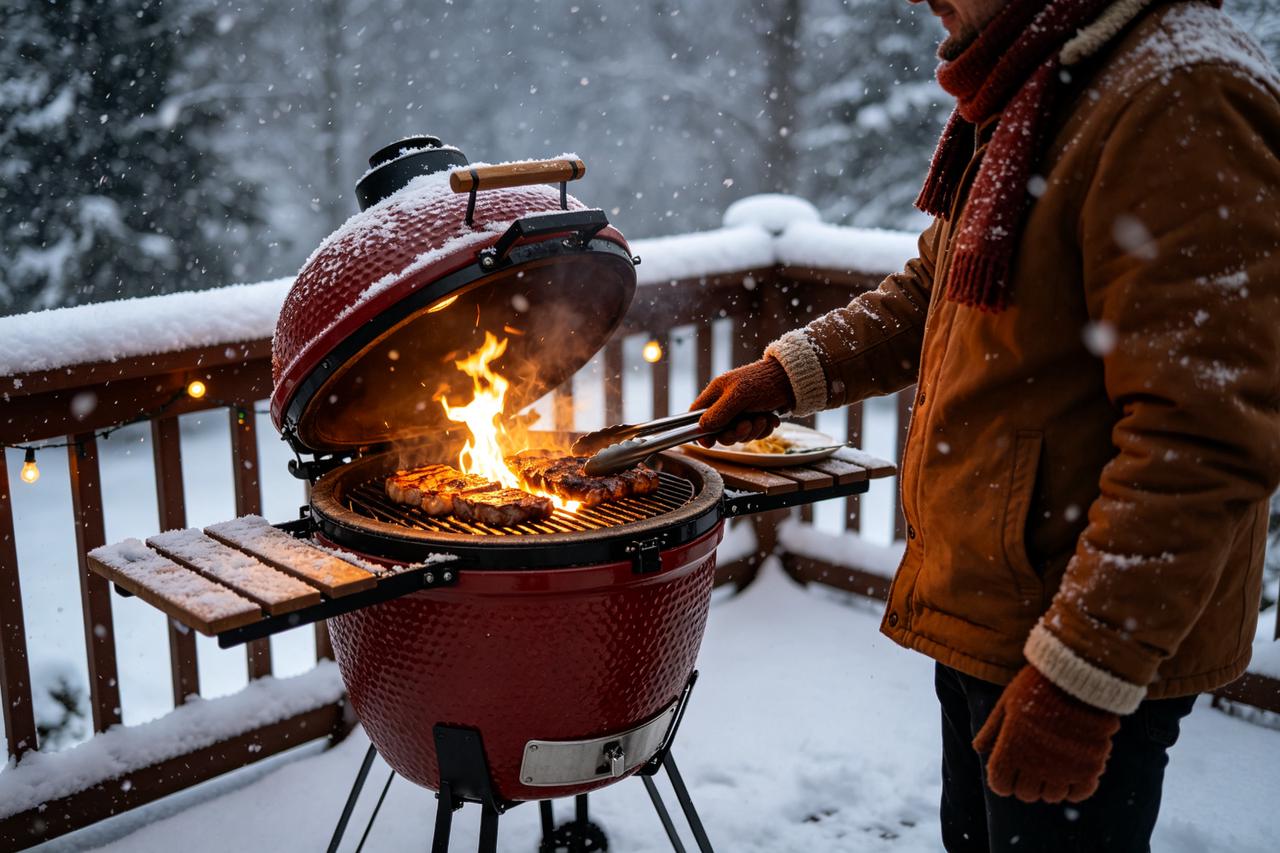
Unlike thin-walled gas grills and kettle grills that struggle to maintain temperature in cold weather, a kamado’s 1–2 inch thick ceramic walls act like a thermal blanket. Once the grill is up to temperature, the ceramic retains so much heat that cold outside air barely affects it. Many kamado owners report that their grill holds 225°F just as steadily in 20°F weather as it does in 80°F weather — it just takes a bit longer to preheat.
Cold Weather Setup & Tips
1. Allow Extra Preheat Time
In cold weather, your kamado will take 10–15 minutes longer to reach target temperature. Plan accordingly. For low-and-slow cooks at 225°F, allow 30–40 minutes of preheat time. For high-heat searing at 600°F+, allow 45 minutes.
2. Use More Charcoal
Cold weather means the fire has to work harder to maintain temperature. Fill the fire box a bit more than usual — about 2/3 full for low-and-slow, full for high-heat. The extra fuel ensures you won’t run out during a long cook.
3. Open Vents Slightly Wider
Cold air is denser than warm air, which means less oxygen per cubic foot. You may need to open the bottom vent 1/4–1/2 inch wider than you would in summer to achieve the same temperature. Monitor closely and adjust in small increments.
4. Protect from Wind
Wind is the biggest enemy of winter grilling — it can strip heat from the grill and cause temperature fluctuations. Position your kamado in a sheltered spot, or use a windbreak (a fence, a wall, or even a portable wind screen). Never enclose the grill completely — it needs airflow to operate safely.
5. Keep the Lid Closed
This is important year-round but critical in winter. Every lid opening lets cold air in and drops the temperature by 50–100°F. In summer, recovery takes 5–10 minutes. In winter, it can take 15–20. Use a digital probe thermometer so you can monitor food temperature without opening the lid.
6. Mind the Thermal Shock
Ceramic is durable but can crack if subjected to rapid temperature changes. In freezing weather, never splash cold water on a hot grill, and avoid placing frozen food directly on a 700°F grate (let it thaw slightly first). Also, never move a hot kamado from a warm garage into freezing cold — the sudden temperature drop can crack the ceramic.
7. Dress for the Weather
This isn’t a grill tip, but it’s important. Winter grilling means you’re standing outside in the cold. Wear warm layers, waterproof boots, and gloves (keep a pair of heat-resistant BBQ gloves separate from your winter gloves). Keep a thermos of hot coffee or cider nearby.
Winter Kamado Recipes
Recipe 1: Winter Smoked Chili
Temp: 325°F indirect | Cook time: 2.5 hours
Brown 2 lbs of ground beef and 1 lb of chorizo in a cast iron Dutch oven. Add diced onions, bell peppers, jalapeños, and 4 cloves of garlic. Cook until softened. Add 2 cans of diced tomatoes, 1 can of tomato paste, 2 cans of kidney beans, 2 tbsp chili powder, 1 tbsp cumin, 1 tsp smoked paprika, and 1 cup of beef broth. Stir, cover, and place in the kamado. Cook indirectly for 2.5 hours, stirring once halfway through. The smoke adds an incredible depth of flavor. Serve with cornbread, shredded cheese, and sour cream.
Recipe 2: Holiday Smoked Turkey Breast
Temp: 325°F indirect | Cook time: 2.5–3 hours
A 6–8 pound bone-in turkey breast is perfect for a winter family meal. Rub with a compound butter of softened butter, sage, rosemary, thyme, garlic, and orange zest. Smoke over apple wood until the internal temperature reaches 160°F in the thickest part. Rest 20 minutes before slicing. The kamado’s moist heat produces a juicier turkey than your oven ever could.
Recipe 3: Cold-Weather Beer Can Chicken
Temp: 350°F indirect | Cook time: 1.5–2 hours
Rub a whole chicken with a warm spice blend of paprika, brown sugar, cumin, chili powder, salt, and pepper. Sit it on a half-full can of winter ale (something with notes of caramel or spice works beautifully). Cook indirectly until the breast reaches 165°F. The result is crispy-skinned, juicy, and infused with beer and smoke — perfect comfort food for a cold evening.
Recipe 4: Kamado Baked Potatoes with Smoked Pulled Pork
Temp: 375°F indirect | Cook time: 1 hour (potatoes) + leftover pulled pork
Poke 4 large russet potatoes with a fork, rub with olive oil and coarse salt, and place directly on the grate. Bake indirectly for 1 hour until tender. Split open, fluff the insides with butter, and top with leftover smoked pulled pork, BBQ sauce, shredded cheddar, sour cream, and chives. It’s a hearty, satisfying meal that makes great use of leftovers from a weekend smoke.
Safety Reminders for Winter Grilling
- Never use your kamado in an enclosed space (garage, tent, porch) — carbon monoxide is a silent killer.
- Keep a clear path to the grill — shovel snow and ice from your walking route.
- Never use a grill lighter or charcoal starter near gasoline or other accelerants.
- Keep a fire extinguisher or bucket of sand nearby, just in case.
- If your grill has been sitting in freezing temperatures, let it acclimate to the outdoors for 30 minutes before lighting — this reduces thermal shock risk.
Winter grilling on a kamado isn’t just possible — it’s genuinely enjoyable. There’s something magical about standing by a warm, smoking grill while snow falls around you, knowing that in a few hours you’ll be eating the best meal of the season. Don’t let the cold keep you indoors.
Post time: Aug-24-2026