
 A Brief History: From Clay Ovens to Backyard Icons
The kamado’s ancestors trace back to ancient China and Japan, where clay cooking vessels called “kamados” (literally “stove” or “cooking range”) were used for everyday meals. These earthenware ovens were prized for their ability to retain heat and produce evenly cooked food. In the mid-20th century, American servicemen stationed in Japan brought the concept home, and manufacturers began refining the design with modern ceramics, steel hardware, and precision airflow vents.
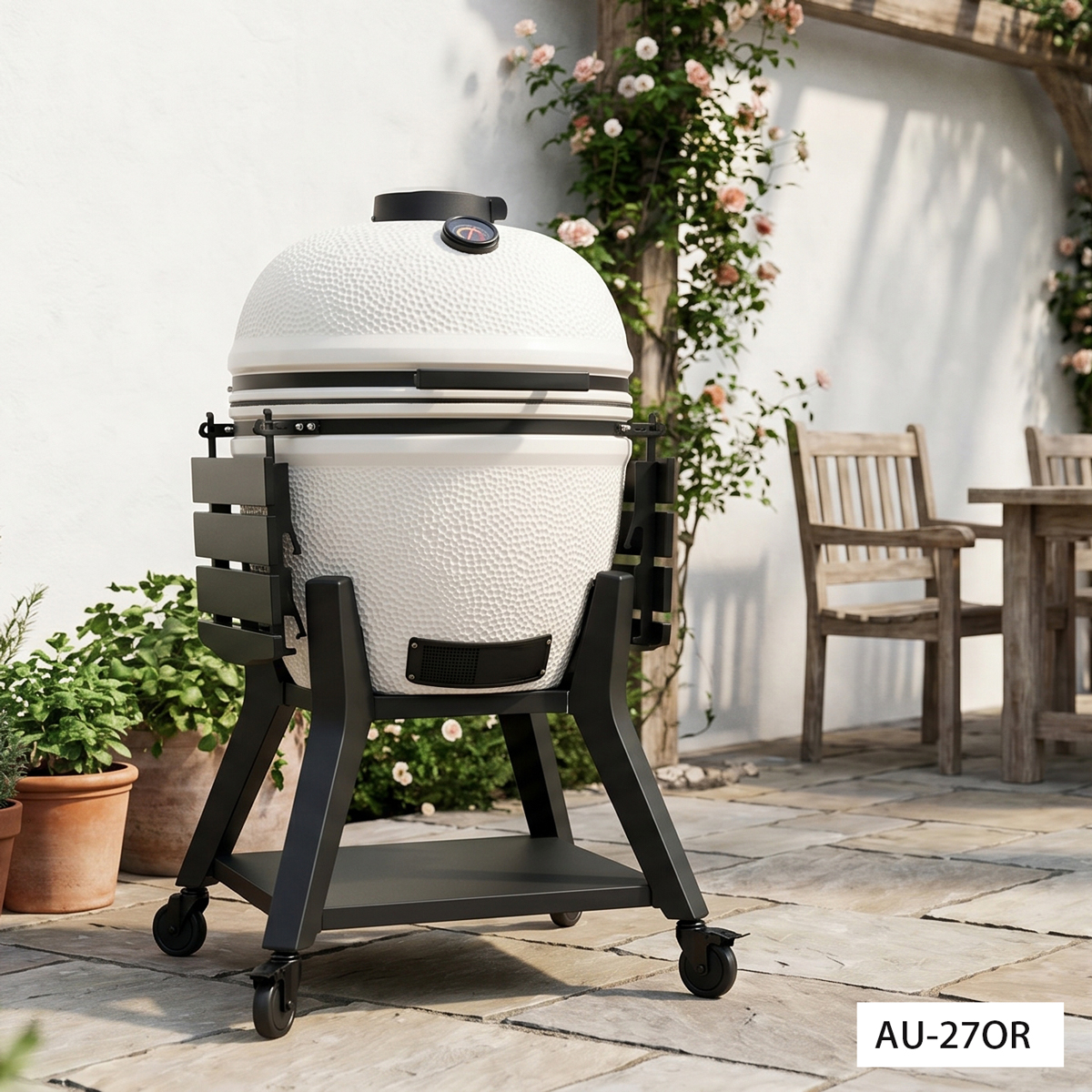
Today’s kamado grills — like the Auplex ceramic series — combine that ancient thermal wisdom with engineering refinements: food-grade ceramic bodies, stainless steel bands, calibrated draft doors, and heat-resistant gaskets that lock in temperature.
How a Kamado Grill Works
The magic of the kamado lies in three design principles:
- Thick ceramic insulation — The walls absorb and radiate heat evenly, eliminating hot spots and maintaining stable temperatures for hours on a small amount of charcoal.
- Dual-vent airflow control — A bottom draft door and top vent work together to regulate oxygen flow. Close them down for low-and-slow smoking at 225°F; open them wide for searing at 700°F+.
- Tight-sealing lid — The gasketed dome traps moisture and smoke, creating a convection-like environment that keeps food juicy while infusing wood-fired flavor.
Because the ceramic body holds so much thermal mass, temperature swings are minimal. Once you dial in your vents, the grill can hold a steady temperature for 8–12 hours — perfect for overnight brisket or all-day ribs.
What Can You Cook on a Kamado?
The short answer: almost everything. Here’s a breakdown of the most popular cooking styles:
- Low-and-slow smoking (225–275°F): Brisket, pulled pork, ribs, turkey, and whole chickens.
- Roasting (325–400°F): Whole chickens, prime rib, leg of lamb, and roasted vegetables.
- High-heat searing (500–750°F): Steaks, burgers, seafood, and kebabs with a restaurant-quality crust.
- Baking & pizza (400–600°F): Artisan bread, cookies, and Neapolitan-style pizza with a blistered crust.
Why Choose a Kamado Over Other Grills?
Kamado owners consistently cite three advantages: versatility, fuel efficiency, and durability. A single kamado replaces a smoker, a grill, and an outdoor oven. It uses roughly half the charcoal of a comparable kettle grill because the insulated body needs less fuel to maintain heat. And with proper care, a quality ceramic kamado can last decades — many owners report 15+ years of faithful service.
If you’re ready to elevate your outdoor cooking, a kamado grill is one of the most rewarding investments you can make for your backyard.
Post time: Aug-21-2026